
Try Scuba Diving in Phu Quoc (2026): No License or Experience Needed

Have you ever wondered what it feels like to breathe underwater?
Many people think scuba diving is only for experienced, certified divers. In reality, you can experience your very first dive during your holiday in Phu Quoc without a license, without any prior experience, and under the constant supervision of a professional instructor.
And the best part? You don't have to complete a multi-day diving course or spend a significant amount of money on a diving certification just to find out whether scuba diving is right for you. Try Scuba Diving lets you experience real scuba diving during a single trip.
If you join one of our snorkeling or island hopping tours, you can simply add Try Scuba Diving as an optional experience on the spot.
Quick Facts
Need to Know
📍 Location: South Phu Quoc Coral Reefs
🤿 Experience Required: None
🎓 Diving License: Not required
👨🏫 Instructor Ratio: 1:1
🌊 Maximum Depth: Up to 6 m (20 ft)
⏱️ Underwater Time: 20–25 minutes
👶 Minimum Age: 10+ (depending on the dive center)
💰 Price: From 1,750,000 VND
🚤 Available As: Optional add-on to our snorkeling & island-hopping tours
Is This Experience Right for You?
✅ No diving license required
✅ No previous diving experience needed
✅ Suitable for non-swimmers
✅ Personal instructor (1:1)
✅ Perfect for first-time divers
✅ Easy add-on to our snorkeling & island-hopping tours
You'll Experience
🐠 Tropical fish and coral reefs
🤿 Real scuba diving with a regulator
📸 Underwater photos and videos
🌴 Calm, shallow reef ideal for beginners
🛥️ Speedboat access to the dive site
💙 Your first underwater breath in the ocean
📍 Continue exploring Phu Quoc snorkeling and island-hopping tours
What Is Try Scuba Diving?

Try Scuba Diving (also known as Discover Scuba Diving) is a trial dive designed for complete beginners. It's ideal for anyone visiting the ocean for the first time, anyone who has never snorkeled, or anyone who simply wants to experience scuba diving without committing to a full certification course.
This is not a diving course, and you won't earn a certification. The goal is to discover what it feels like to breathe underwater and swim among coral reefs.
Before entering the water, you'll receive a short briefing that takes about five minutes. Your
instructor will explain:
how to breathe correctly through the regulator,
how to control your descent and ascent,
how to use your diving mask,
how to equalize pressure in your ears,
basic underwater hand signals,
essential safety rules.
After that, you'll enter the water together and begin your first dive.
Every beginner is accompanied by their own certified instructor throughout the entire dive (1:1 ratio).
Do I Need to Know How to Swim?
This is the most common question we get.
No. Try Scuba Diving is designed specifically for complete beginners. You don't need any previous experience with snorkeling or scuba diving. Many people try it during their very first visit to the ocean, and many non-swimmers successfully complete it as well.
Every beginner has their own certified instructor (1:1 ratio) who stays by their side throughout the entire dive. Your instructor monitors the whole experience, helps you move underwater, ensures your safety, and adjusts the pace to your comfort level.
If you feel uncomfortable at any point, simply give the agreed hand signal. Together, you'll slowly return to the surface. You can then decide whether you'd like to end the dive or continue after a short break.
That's why most people discover after just a few breaths that breathing underwater is much easier and more natural than they expected.
How Deep Do You Dive?
Beginner dives take place at a maximum depth of approximately 6 meters (20 feet).
This is the ideal depth for a first scuba diving experience. There's plenty of natural sunlight, excellent visibility, and the highest concentration of marine life on the coral reefs. Most tropical fish, sea anemones, and colorful corals live in these shallow waters.
You don't need to dive deep to experience the underwater world. In fact, shallow water allows beginners to feel more comfortable, enjoy the dive at a relaxed pace, and fully appreciate the incredible marine life around them.
Throughout the dive, your instructor remains by your side, adjusting both the depth and the pace to match your comfort level and confidence underwater.
Sea Walking or Try Scuba Diving?

The good news is that both activities take place at the same location. If you're traveling as a couple, family, or group of friends, you don't all have to choose the same experience.
While one person can enjoy Try Scuba Diving, another can choose Sea Walking, which is even easier and requires no previous experience. During Sea Walking, your head stays completely dry. You don't need a diving mask or regulator, and thanks to a specially designed helmet, you can simply walk on the seabed while breathing naturally through both your nose and mouth.
Although both activities are designed for beginners, they offer two very different experiences.
Sea Walking is the better choice if you:
don't want to put your face underwater,
don't want to get your hair or ears wet,
wear prescription glasses,
don't feel confident in the water,
want the easiest possible way to experience the underwater world.
Try Scuba Diving is the better choice if you:
want to swim freely underwater,
want to experience real scuba diving,
dream of exploring coral reefs up close,
want to experience the feeling of weightlessness underwater,
are thinking about getting a scuba diving certification in the future.
Whichever option you choose, you'll have the chance to see colorful coral reefs and tropical fish. The only difference is how you experience the underwater world.
How Long Does the Experience Take?

The dive itself lasts approximately 20–25 minutes underwater.
The entire experience, including the briefing, equipment preparation, and getting dressed in your diving gear, takes about one hour.
That's why Try Scuba Diving is the perfect add-on to any of our snorkeling or island hopping tours in southern Phu Quoc.
How Much Does Try Scuba Diving Cost?
Try Scuba Diving is available as an optional add-on to our snorkeling and island hopping tours.
The price starts from 1,750,000 VND per person and is paid directly to the dive center.
The price includes:
complete scuba diving equipment,
a short safety briefing,
your own certified instructor,
a 1:1 introductory dive.
For comparison, Sea Walking is available in two packages:
Basic Package: from 1,550,000 VND per person
VIP Package: from 1,950,000 VND per person
Both activities can be added to any of our snorkeling or island hopping tours. If you're not sure which experience is right for you, we'll be happy to help you choose on the day of your tour.
Who Is Try Scuba Diving For?
Try Scuba Diving is suitable for almost anyone who wants to experience the underwater world for the first time. You don't need a diving certification or any previous experience. Thanks to the individual guidance of your instructor, almost anyone can enjoy their very first scuba dive.
Complete Beginners
Have you never been scuba diving, never snorkeled, or is this your first time visiting the ocean? Then Try Scuba Diving is made for you. Your instructor will guide you through every step of the experience at your own pace.
People Who Aren't Confident in the Water
You don't need to be a strong swimmer or an athlete. The dive takes place in shallow water, and your certified instructor stays with you throughout the entire experience in a 1:1 ratio.
Couples and Families
One person can enjoy Try Scuba Diving while others choose snorkeling, Sea Walking, or simply relax on the boat. Everyone can enjoy the day in the way that suits them best.
Travelers Looking for a Unique Experience
Beautiful beaches and sunsets are unforgettable, but very few people return home with the memory of taking their very first breath underwater and swimming among tropical fish on a real coral reef.
Future Divers
If you've ever thought about getting a scuba diving certification, Try Scuba Diving is the perfect way to find out whether scuba diving is something you'll truly enjoy - without committing to a full certification course.
Snorkelers Who Want to Get Closer to Marine Life
Many people wear a life jacket while snorkeling because they don't feel completely confident in the water or aren't strong swimmers. While this makes snorkeling safer, it also means staying on the surface and missing the chance to get close to the coral reefs.
Try Scuba Diving offers a completely different experience. Accompanied by your own instructor, you'll slowly swim among the corals, observe tropical fish up close, and discover the underwater world from a perspective that snorkeling simply can't offer.
If you've ever found yourself thinking, "I wish I could get a little closer," then Try Scuba Diving is the perfect next step.
When Is Try Scuba Diving Not Suitable?

Try Scuba Diving is a safe experience for most healthy people. However, there are some medical conditions where scuba diving is not recommended or where you should consult your doctor before participating.
Scuba diving is generally not recommended for people with:
serious heart conditions,
untreated high blood pressure,
severe or poorly controlled asthma,
epilepsy,
pregnancy,
ear infections.
If you're unsure whether scuba diving is suitable for you, let us know before booking. We'll be happy to advise you or recommend a suitable alternative, such as Sea Walking or snorkeling.
Why Is It Worth Trying Try Scuba Diving at Least Once?

Many people dream of becoming certified scuba divers. But before investing several days of your vacation and a significant amount of money in a full certification course, it's worth asking yourself a few simple questions.
Will I actually enjoy scuba diving?
Will I have opportunities to dive again in the future?
Will I really make use of a scuba certification after my vacation?
Do I feel comfortable underwater?
That's exactly why Try Scuba Diving (also known as Discover Scuba Diving) exists. It gives you the opportunity to experience a real scuba dive with full diving equipment under the direct supervision of your own certified instructor - without committing to a multi-day certification course.
This isn't a demonstration or a simulation. You'll breathe through a regulator, swim among coral reefs and tropical fish, and experience what scuba diving really feels like. The only difference is that your instructor stays with you throughout the entire dive in a 1:1 ratio.
If you finish your dive and discover that you love scuba diving, you can always enroll in a full certification course later. If you decide it's not for you, you'll have your answer after one unforgettable experience - instead of spending several days of your vacation and considerably more money on a certification you might never use again.
For many of our guests, Try Scuba Diving is the first step into the world of scuba diving. For others, it's simply a once-in-a-lifetime experience they've always wanted to try. Both are equally great reasons to do it.
If your first dive leaves you wanting more, the next step is a full-day scuba diving trip to some of the most beautiful dive sites around Phu Quoc.
What will you see during the dive?

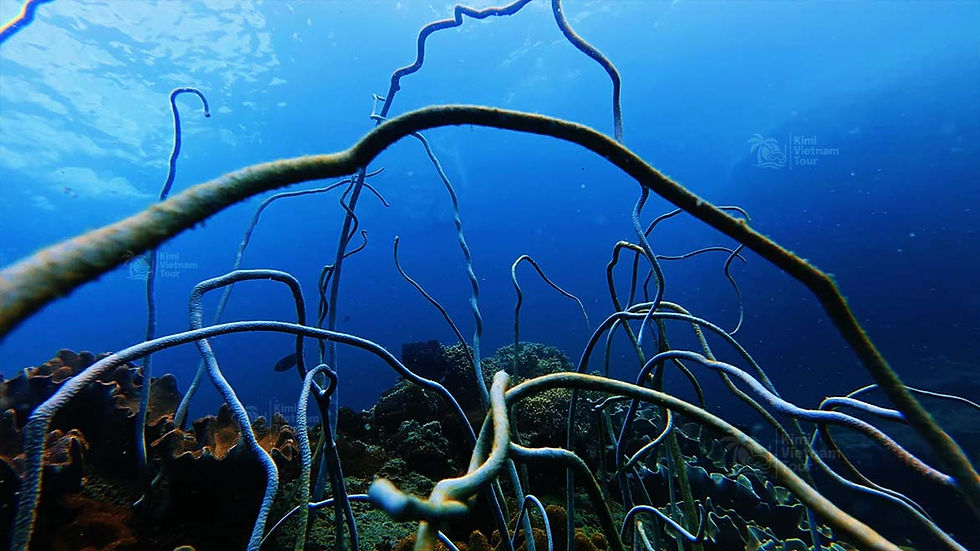
Try Scuba Diving takes place on shallow coral reefs around the islands of southern Phu Quoc, one of the best locations on the island for beginner scuba diving.
During your dive, you may encounter:
clownfish living in sea anemones (Nemo),
parrotfish,
butterflyfish,
schools of tropical fish,
giant clams,
sea cucumbers,
starfish,
hard and soft corals in a wide variety of shapes and colors.
Because the dives take place in shallow water, plenty of natural sunlight reaches the reef. This makes the corals especially colorful and allows you to enjoy excellent visibility without diving to greater depths.
If you're not an experienced freediver or snorkeler, scuba diving gives you the opportunity to get right among the corals and observe marine life from just a few feet away. For many people, this close-up perspective is the biggest difference compared to snorkeling.
Want to know which fish, corals, and other marine creatures you can see in Phu Quoc?
Check out our detailed guide:
How do you breathe during Try Scuba Diving?
One of the most common questions we hear is:
"How do I breathe underwater?"
During Try Scuba Diving, you breathe through a scuba regulator that stays in your mouth throughout the dive. This means you breathe only through your mouth. Your nose is covered by your diving mask and isn't used for breathing.
Before entering the water, you'll practice breathing from the regulator at the surface. Your instructor will explain everything step by step, and you'll only begin the dive once you feel comfortable.
What's the difference between Try Scuba Diving and Sea Walking?
With Sea Walking, you wear a special helmet supplied with a continuous flow of air. This allows you to breathe naturally through both your nose and your mouth, just as you would on land.
With Try Scuba Diving, you use standard scuba equipment with a regulator in your mouth. Breathing through your mouth is the worldwide standard for both recreational and professional scuba diving.
Why don't scuba divers use a full-face mask?
A common question is why scuba diving doesn't use a full-face mask like some snorkeling masks that allow you to breathe through your nose.
The main reason is ear pressure equalization. As you descend, you need to pinch your nose regularly to equalize the pressure in your ears. With a standard snorkeling-style full-face mask, you simply can't reach your nose to do this.
A traditional scuba mask makes pressure equalization quick and easy, allows better communication with your instructor, and is the standard equipment used for beginner scuba diving courses around the world.
Does diving hurt your ears?

No. Scuba diving itself doesn't hurt. However, as you descend, you'll need to equalize the pressure in your ears, similar to the feeling you experience during an airplane's descent.
Before the dive, your instructor will explain and demonstrate the technique, then guide you through it during the descent. If you're unable to equalize the pressure, the dive will be safely paused or ended.
The most common technique is the Valsalva maneuver, used by scuba divers, freedivers, and even snorkelers when diving below the surface.
Gently pinch your nose.
Close your mouth.
Blow gently against your pinched nose, as if trying to exhale through it.
Once you feel a slight "pop" or the pressure in your ears is relieved, continue your descent slowly.
Important: Equalize your ears early and often, before you feel any pain or discomfort. Never continue descending if you can't equalize the pressure. Your instructor will stay beside you throughout the dive and adjust the descent to your comfort level.
Frequently Asked Questions (FAQ)

Do I need a diving license?
No. Try Scuba Diving is designed specifically for people with no diving license and no previous diving experience.
Do I need to know how to swim?
No. Try Scuba Diving is suitable even for non-swimmers. You'll be accompanied by your own instructor throughout the dive on a 1:1 basis.
How deep will I dive?
Beginner dives take place at a maximum depth of about 6 meters (20 feet), making them ideal for first-time divers.
How long will I be underwater?
The dive itself lasts approximately 20–25 minutes. Including the briefing, equipment setup, and preparation, the entire experience takes about one hour.
Does diving hurt your ears?
No. As you descend, you'll simply need to equalize the pressure in your ears. Your instructor will explain the technique before the dive and guide you throughout the descent.
What if my mask floods?
Don't worry. This is a common situation that you'll learn how to handle, and your instructor will help you immediately if needed.
What if my regulator comes out of my mouth?
This is another basic skill you'll practice during the briefing. Your instructor will be right beside you throughout the dive and can assist immediately if necessary.
What if I get scared?
That's completely normal. You're never required to continue. If you feel uncomfortable at any point, the dive can be safely paused or ended.
Can children try scuba diving?
Yes. In most cases, children aged 10 and older can participate. The minimum age may vary depending on the dive center's policies.
Can I wear contact lenses?
Yes. Contact lenses are perfectly fine for scuba diving. We simply recommend wearing a properly fitted mask and avoiding removing your lenses during the dive.
Can I dive if I have a beard?
Yes. A beard isn't usually a problem as long as your mask creates a good seal. With very thick beards, the mask may need a little extra adjustment.
Can I combine Try Scuba Diving with snorkeling?
Yes. We offer Try Scuba Diving as an optional add-on to our snorkeling and island-hopping tours.
How much does Try Scuba Diving cost?
Prices start from 1,750,000 VND per person and are paid directly to the dive center. The price includes all diving equipment, a short briefing, your own certified instructor, and a 1:1 introductory dive.
Ready for Your First Dive?

You can easily add Try Scuba Diving as an optional activity to any of our snorkeling and island-hopping tours in southern Phu Quoc. There's no need to book a multi-day diving course or search for a separate dive center - simply choose the tour that suits you best.
Try Scuba Diving is available (subject to sea conditions and instructor availability) on the following tours:
Join-in Tours
3 Island Phu Quoc Hopping by Speedboat (Relax, Swim & Photos)
4 Island & Hon Thom Cable Car by Speedboat (Islands, Water Park & Cable Car)
Private Tours
Private 4 Island Speedboat Adventure in South Phu Quoc
Private Speedboat Snorkeling Tour in South Phu Quoc
Private Speedboat Snorkeling & Hon Thom Cable Car Tour
Whether you choose a join-in or private tour, you'll have the opportunity to experience your very first scuba dive on some of the most beautiful coral reefs in southern Phu Quoc, accompanied by your own certified instructor on a 1:1 basis.
Choose your tour and discover the underwater world of Phu Quoc from a whole new perspective.


